

Chicago Motorcycle Accident Lawyer for Serious Rider Injuries
Hurt in a Motorcycle Crash and Unsure What to Do Next?
Drivers in this city don't always see you, and when they don't, the consequences fall entirely on you. Motorcycle crashes can leave riders with serious injuries, extended recoveries, and insurance companies that are already looking for reasons to minimize what they pay. At the Law Offices of Leonard S. Becker, we've spent more than 30 years helping injury victims across Chicago and the surrounding counties fight back against exactly that, including riders from Cicero, Waukegan, and Naperville who want straight answers about where their claim stands. If a crash took someone's life, our wrongful death page explains what options may be available to the family. The sooner you act, the stronger your position will be.
Where We Take Motorcycle Cases Across Chicago and Seven Counties
Your crash does not have to have happened downtown for us to take it. We handle motorcycle claims in Chicago and across Cook, DuPage, Lake, Will, Kane, McHenry and Kankakee counties, including riders in Cicero, Waukegan and Naperville.

These are the roads our clients get hit on:
- The Dan Ryan and Edens stretches of I-94, where a lane change at highway speed leaves a rider nowhere to go.
- The Eisenhower and the Stevenson, where short merge ramps put cars into a rider's lane with no warning.
- I-355 and Route 59 through Naperville, where a driver crossing a divided road misjudges how fast a motorcycle is closing.
- Lake Shore Drive, where curves and heavy weekend traffic hide a rider from the car changing lanes beside him.
- Cicero Avenue, Ogden Avenue and Milwaukee Avenue, where left turns across oncoming traffic and cars pulling out of angled parking cause most of the rider injuries we see.
- Sheridan Road through Waukegan, where intersections and driveway entrances come one after another with no room to react.
Where your case gets filed depends on where the crash happened:
- A Cook County case is filed in the Law Division at the Richard J. Daley Center in Chicago.
- A DuPage County case is filed in Wheaton.
- A Lake County case is filed in Waukegan.
- A Will County case is filed in Joliet.
- A McHenry County case is filed in Woodstock.
Our office is at 311 N. Aberdeen, Suite 200D, Chicago, IL 60607, about ten blocks west of downtown, with parking and access from the CTA Blue and Green lines. Call
(312) 492-7700or email
info@lsblaw.net. If a fractured leg, a pelvic injury or a hospital stay means you cannot get to us, we come to your home or your hospital room.
$350,000 for a Rider With a Fractured Leg
That recovery came from a case built the same way every other one here was built: the scene documented before it changed, the injury documented through the full course of treatment, and the claim prepared for a courtroom rather than for a phone call.
The same fight shows up in the rest of our transportation injury record:
- $3 million for a woman struck by a garbage truck.
- $2.2 million for a client whose lumbar injury required spinal fusion.
- $2 million verdict in a collision between an SUV and a truck.
- $527,000 arbitration award for an injured bicyclist, a case that turned on the same insurer instinct to blame the person with no metal around him.


What to Do Immediately After a Motorcycle Accident
The steps you take in the hours after a crash can affect both your recovery and the strength of your claim. Here's what matters most.
Seek medical attention immediately
Some injuries, including concussions and internal trauma, don't show up right away. Getting checked out early protects your health and creates a record of what the crash caused.
Call law enforcement and document the crash
A police report documents the date, location, drivers involved, and initial observations about what happened. It often becomes one of the most important pieces of evidence in a claim.
Photograph the scene if you're able to
Vehicle positions, road conditions, skid marks, and visible injuries can all help clarify what happened and who was responsible. Take photos before anything is moved.
Avoid discussing fault with the insurance company
Adjusters are trained to ask questions that can reduce or complicate your claim. You don't have to answer them before speaking with a lawyer.
Talk to a lawyer before accepting any settlement
Early offers are often designed to close the file before the full extent of your injuries is known. A legal review helps you understand what your claim is actually worth before you agree to anything.
Common Situations Where Motorcycle Injury Claims Arise
Most Chicago motorcycle crashes are not mysteries. They follow a small number of patterns, and each pattern points at a specific Illinois traffic statute the driver broke.
Left-Turn Collisions
A driver turning left across your path owes a duty to yield to oncoming traffic under 625 ILCS 5/11-902. This is the most common serious motorcycle crash in the city, and the driver's account is almost always that the bike came out of nowhere. We reconstruct sight lines, signal timing and closing speed so the question becomes what the driver was required to do rather than what he claims he saw.
Lane-Change and Lane-Position Crashes
A motorcycle is entitled to the full use of its lane under 625 ILCS 5/11-703, so a driver who drifts over and crowds a rider out of that lane has violated the statute, not made an understandable mistake. The same section prohibits riding between lanes, which is the second argument an adjuster reaches for after the helmet question. Where you were in your lane at the moment of impact is a fact, and dash camera footage, vehicle damage and roadway evidence establish it.
Rear-End Collisions
A motorcycle stopped at a light offers a following driver a narrow visual target and offers the rider no crash structure at all. A low-speed rear-end impact that would dent a bumper can fracture a wrist, herniate a disc or throw a rider into the vehicle ahead. We document the mechanism of injury early, because the property damage photographs will not tell the story on their own.
Passenger Injuries
A passenger on a motorcycle has her own injury claim, separate from the rider's, and she can bring it whether the other driver, the rider she was with, or both of them were at fault. That claim can reach more than one insurance policy. We sort out which policies apply before anyone signs anything.
Bias, Blame and the 50% Rule in an Illinois Motorcycle Claim
Insurers start from an assumption about riders, and that assumption shows up as a percentage of fault assigned to you in the file. Illinois modified comparative fault is written down at 735 ILCS 5/2-1116: your claim is barred only if your own fault is more than 50%, and at anything below that your recovery is reduced by your percentage rather than eliminated. Every point an adjuster can attach to you is money out of your case, which is why the number gets argued so hard.
As an Illinois motorcycle accident attorney the work here is evidentiary, not rhetorical. Roadway measurements, signal timing, damage patterns, witness statements and medical records establish what actually happened, and objective evidence is what moves an assigned percentage back down. A cyclist meets the identical argument, and our
bicycle accident claims run on the same approach.
Illinois Has No Helmet Law, and the Adjuster Knows That
Illinois does not require an adult rider to wear a helmet. If you were not wearing one, you broke no Illinois traffic law, and the choice you made is not a traffic violation the other side gets to hand a jury.
What Illinois does require of a rider is eye protection. Under 625 ILCS 5/11-1404 the requirement is glasses, goggles or a transparent face shield, not a helmet. That is the whole of the state's rule on rider gear.
So when the adjuster keeps returning to the helmet question, understand what is happening: there is no statute behind it. It is an attempt to move fault percentage under 735 ILCS 5/2-1116 using something that was legal. The question that decides your case is who turned left, who changed lanes and who failed to yield.
Injury Patterns Common in Motorcycle Crashes
Riders have no steel frame, no airbags, and very little between them and the road. The injuries that result from motorcycle crashes reflect that reality, and in the most serious cases, they can be fatal. Families of riders who didn't survive can find guidance on their options through our wrongful death claims page.
Orthopedic Trauma
Fractures to the legs, arms, ribs, and pelvis are among the most common injuries in motorcycle crashes and often require surgery, hardware, and months of rehabilitation.
Traumatic Brain Injuries
Even helmeted riders can suffer concussions or more serious brain injuries that affect memory, concentration, and the ability to function day to day.
Spinal Injuries
Back and spinal injuries can require extensive treatment and may have lasting effects on mobility and long-term health that don't fully reveal themselves until well after the crash.
Soft Tissue and Road Rash Injuries
Skin and muscle injuries can look less serious than they are. Without proper treatment, they can become complicated, painful, and expensive to address over time.
Evidence That Strengthens a Motorcycle Accident Claim
A strong motorcycle accident claim is built on documentation, and the sooner that documentation is gathered, the better. The most valuable materials typically include the police crash report, medical records and treatment history, scene photos and video footage, witness statements, vehicle damage analysis, and accident reconstruction findings where the crash requires it.
Getting this evidence together early helps make sure your claim reflects the true impact of what happened, not a stripped-down version the insurer finds more convenient.
Two Years to File, and Less Time Than That to Preserve Your Case
An Illinois motorcycle accident lawyer works against two clocks, and only one of them is in the statute.
The filing deadline for a personal injury lawsuit in Illinois is two years from the date of the crash under 735 ILCS 5/13-202. If a motorcycle crash killed a family member, the wrongful death claim runs on its own two-year clock under 740 ILCS 180/2, measured from the date of death. Certain circumstances change these periods, so the date on your own case is worth confirming rather than assuming.
The second clock is shorter and nobody publishes it. Intersection and business camera footage overwrites within days. Roadway evidence is swept. A damaged motorcycle gets repaired or salvaged. Witnesses move and stop answering. Two years is when the courthouse door closes, not when the proof runs out.
Ready to Put Your Claim in Experienced Hands?
Insurance negotiations after a motorcycle crash can get complicated fast, especially when the insurer starts raising questions about how you were riding. You shouldn't have to counter those arguments on your own. The next step is putting your claim with a legal team that knows how to meet that strategy with evidence and push back effectively.
What Happens When the Driver Who Hit You Has No Insurance
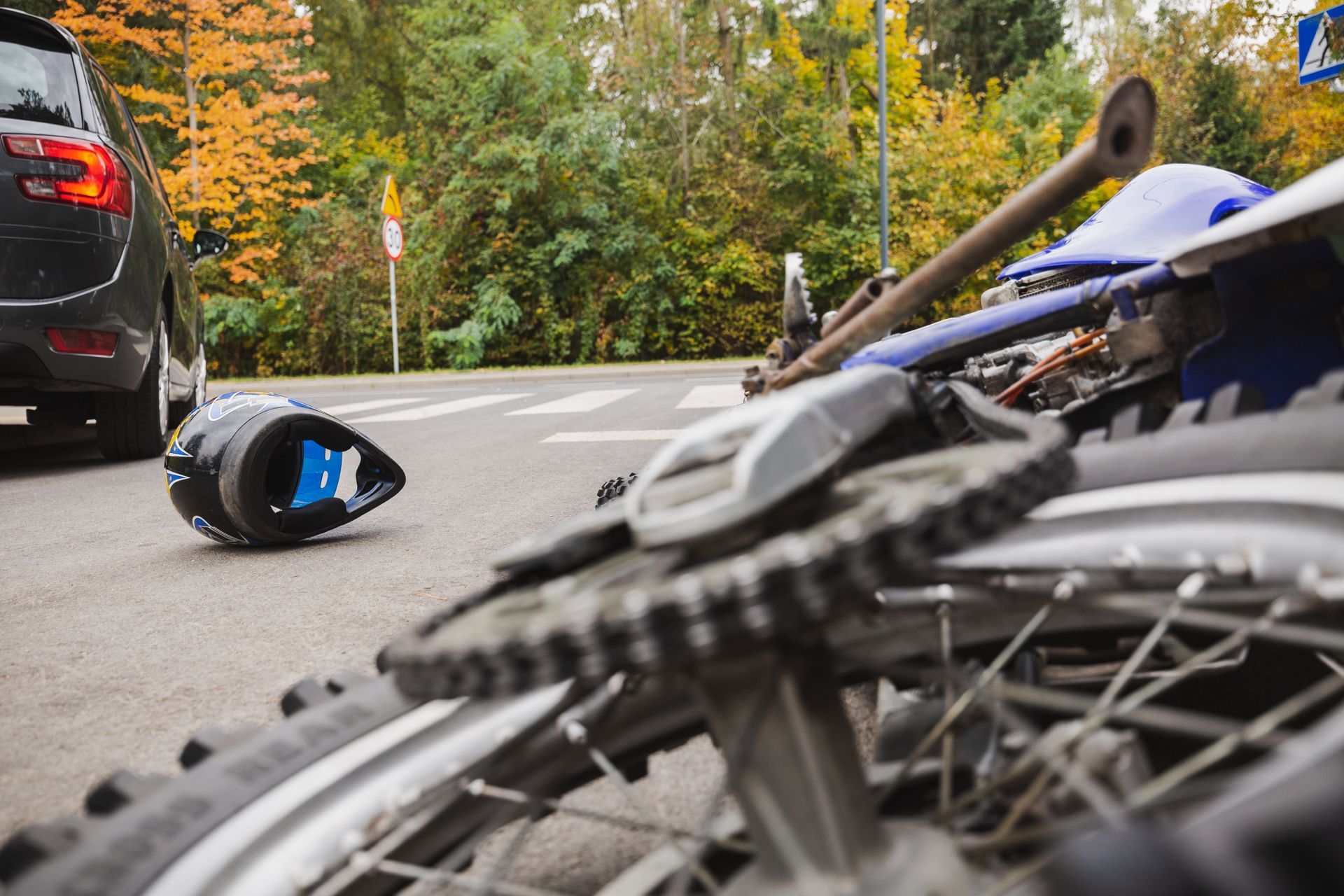
A large share of Chicago motorcycle crashes involve a driver who cannot pay for what he did. That does not end your claim. It moves it.
You have a claim through your own uninsured and underinsured motorist coverage in each of these situations:
- The driver who hit you carried no liability insurance at all.
- The driver carried Illinois minimum limits, and your surgery, hospitalization and lost income exceed them.
- The driver left the scene and was never identified.
The catch is that this claim runs against your own insurance company under the terms of your policy, which means it carries contract deadlines and notice requirements of its own that are separate from the two-year filing deadline for a lawsuit. Missing a notice provision in your own policy can cost you the coverage you paid for. Our page on uninsured, underinsured and hit-and-run claims covers how those claims are presented and what the policy requires of you.
Call (312) 492-7700
or email
info@lsblaw.net
and we will read your policy and tell you what coverage is actually there.

What to Expect When Starting a Motorcycle Injury Claim
When you contact the Law Offices of Leonard S. Becker, the first step is a conversation about how the crash happened and what you've been dealing with since. From there, we get to work collecting police reports, medical documentation, scene photos, and witness statements. Where the circumstances require it, we may also bring in accident reconstruction to establish a precise account of how the crash occurred. Everything gets organized around liability evidence and documented damages, and if the insurance company won't come to the table with a fair offer, the case is built from the start to go further.
Initial consultation
We go through the accident, your injuries, and the available evidence to identify the strongest path forward.
Evidence preservation
Police reports, medical records, witness accounts, and accident reconstruction findings where applicable are gathered and secured.
Claim development
Liability proof and financial damages are organized into a claim that reflects the full cost of what happened to you.
Negotiation or litigation preparation
Whether the case resolves through negotiation or moves forward in court, it's prepared to go the distance from day one.
Your Motorcycle Accident Questions Answered
What should I do immediately after a motorcycle crash in Chicago?
Get medical attention the same day, even if you think you can walk it off, because a concussion and internal injuries do not always announce themselves at the scene. Call the police so there is a report, and photograph the vehicles, the roadway and your gear if you are able to. Do not discuss fault with any insurance company before you have talked to a lawyer.
Is my case worth less if I was not wearing a helmet?
Illinois does not require an adult rider to wear a helmet, so not wearing one violates no Illinois traffic law and is not a defense the other side is entitled to. The state's rule on rider gear, 625 ILCS 5/11-1404, asks for glasses, goggles or a transparent face shield. Expect the adjuster to raise it anyway as a way to push fault percentage onto you, and expect us to answer it with the statute.
Can a motorcycle passenger file her own injury claim in Illinois?
Yes. A passenger has an injury claim of her own, independent of the rider's, and she is rarely assigned any fault for the crash itself. Depending on who was negligent, that claim can reach the other driver's policy, the motorcycle operator's policy, or both.
How long do I have to file a motorcycle accident lawsuit in Illinois?
Two years from the date of the crash under 735 ILCS 5/13-202 for a personal injury lawsuit, and two years from the date of death under 740 ILCS 180/2 for a wrongful death claim. Some circumstances shorten or extend that, which is why the date should be confirmed early. The evidence that proves the case disappears well before the deadline does.
What if the insurance company says I was partially at fault?
Under 735 ILCS 5/2-1116 your claim is barred only when your own fault is more than 50%. Below that line, your recovery is reduced by your percentage rather than wiped out, so the percentage itself is what gets fought over. Objective evidence, roadway measurements, damage analysis and witness accounts are what push an assigned percentage back down.
Who pays if the driver who hit my motorcycle had no insurance?
Your own uninsured and underinsured motorist coverage responds when the at-fault driver had no insurance, had too little to cover your injuries, or left the scene and was never identified. That claim goes against your own insurer under the terms of your policy and carries its own notice deadlines. Our uninsured and hit-and-run claims page explains how those claims are put together.
How much does a motorcycle accident lawyer cost?
The case evaluation is free, and we work on a contingency fee, so there is no fee unless we recover compensation for you. You pay nothing up front and nothing out of pocket while the case is pending. Our attorney fees page sets out how the contingency percentage works and how case costs are handled.
Protect Your Rights After a Motorcycle Crash
We opened this practice in 1993 and have spent more than thirty years in Chicago courtrooms representing injured people. That record is what a rider is buying when he calls here:
- Admission in the Illinois state courts, the Federal District Court for the Northern District of Illinois and the Seventh Circuit Court of Appeals.
- Membership in the Illinois Bar Association, the Illinois Trial Lawyers Association and the Federal Trial Bar for the Northern District of Illinois.
- Work covered by the Chicago Tribune, the Chicago Sun-Times and the Chicago Daily Law Bulletin.
Every case here is prepared as though it will be tried. That is not a posture for the adjuster's benefit, it is the reason the file is complete enough that trying it is a real option, and insurers price a case differently when it is.
Call (312) 492-7700
or email
info@lsblaw.net. The evaluation is free and there is no fee unless we recover for you