

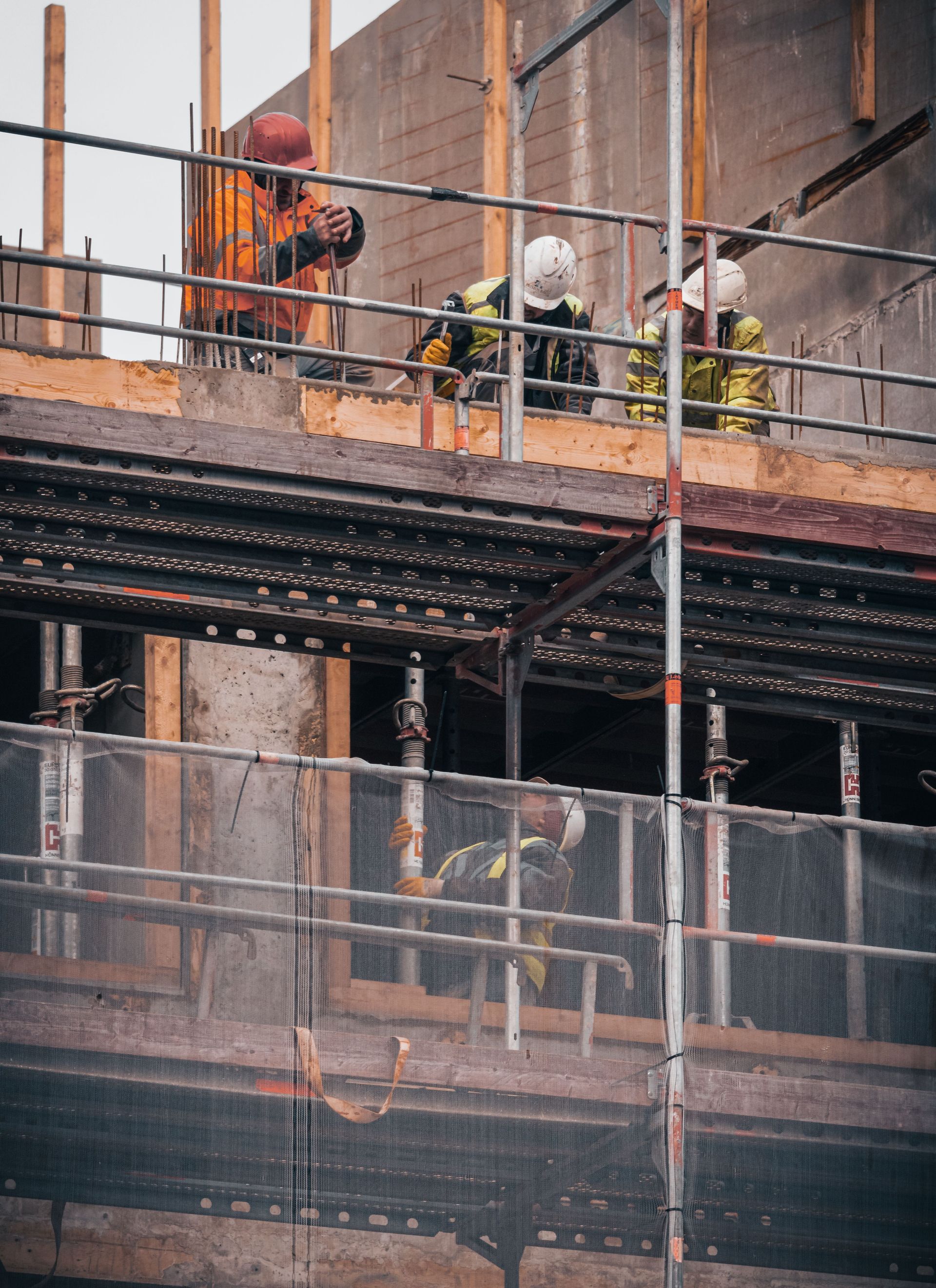
Chicago Construction Accident Lawyer for Job Site Injuries
We handle Chicago construction injuries as what they usually are, two claims running at the same time, the workers' compensation claim against your own employer and the negligence claim against everyone else who was on that site, because the second claim is the one almost nobody tells an injured worker about. Thirty years of trying these cases in Cook County courtrooms is behind every one we take.
Hurt on a Job Site and Getting Two Different Answers?
Your foreman filed something with the office. The comp adjuster calls about treatment authorization. Somebody on the crew says you can sue the general, somebody else says you cannot sue anybody. Meanwhile you have a fusion scheduled and no paycheck.
Both answers are partly right, and the difference between them is worth more money than anything else in your case. An Illinois construction site accident usually produces two claims, and knowing which one is which is the whole job. We will tell you on the first call which claims you have, which deadline is closest, and what has to be requested from that job site before it is gone.
Call (312) 492-7700
or email
info@lsblaw.net.

You May Have Two Claims, Not One
One accident, two separate cases, filed in two different places, and they pay for different things.
Claim one is an Illinois workers' compensation claim against your employer. It pays your medical treatment, part of your lost wages and a permanent disability award, and it pays without any argument about whose fault the accident was. Under Section 5(a) of the Illinois Workers' Compensation Act,
820 ILCS 305/5(a), it is also the only claim you have against your employer. Notice of the injury goes to the employer within 45 days, and the benefit categories, the doctor rules and the denied-claim process are all covered on our
Illinois workers' compensation page.
Claim two is a negligence claim against everyone on that site who was not your employer. Section 5(a) does not protect any of them:
- The general contractor running the site
- Another subcontractor whose crew created the hazard
- The property owner or developer
- The company that supplied, rented or maintained the lift, scaffold, hoist or saw
- The architect or engineer whose plan or sequencing put you in that position
Here is why the second claim matters so much. Workers' compensation pays nothing for pain, nothing for disfigurement, and nothing for what a crushed pelvis or a fused spine does to the rest of your life. Those damages exist only in the third-party claim. Your employer's insurance carrier has no reason to mention it, and it usually does not.
How a Claim Against the General Contractor Actually Works
Illinois repealed the Structural Work Act effective February 14, 1995, so a construction injury claim in this state is now a common-law negligence claim. It is built on the retained-control rule in Section 414 of the Restatement (Second) of Torts, which is where Illinois Pattern Jury Instruction 55.00 on construction negligence comes from.
That claim has to establish four things:
- The contractor or the owner retained control over some part of the work
- It was negligent in the way it exercised that control
- You were injured
- Its negligence proximately caused the injury
The practical test comes from the Illinois Supreme Court in Carney v. Union Pacific Railroad Co., decided in 2016: was the subcontractor left entirely free to do the work in its own way? If the general was directing means and methods, running the safety program, sequencing the trades or controlling access to the hazard, the answer is no.
Which is why the paper decides these cases. The subcontract, the site safety plan, the daily logs, the toolbox talk sign-in sheets and the name of whoever was actually running those meetings tell a jury who was in control on the morning you got hurt. Those records exist right now. Six months from now, on a job that has closed out and demobilized, they often do not, and that is the single strongest reason to call before the site is gone.
How Chicago Job Site Injuries Happen, and What Proves Them
Four categories account for most construction fatalities and catastrophic injuries, and OSHA tracks them as
the focus four:
- Falls from a roof edge, an unguarded floor opening, a scaffold plank or a ladder footed on unlevel ground
- Struck-by injuries from a load swinging off a crane, a load released too early, or material dropped from the floor above
- Caught-in and caught-between injuries in trench collapses and in machinery running without a guard
- Electrocution from live conduit and from a boom, ladder or scaffold contacting an overhead line
Those categories map onto the construction standards at 29 CFR Part 1926. Be clear about what an OSHA violation does and does not do for you. There is no private lawsuit under OSHA, and a citation by itself does not give you a claim. What the OSHA file gives you is evidence, the inspection notes, the citations, the compliance officer's photographs and the witness interviews taken while people still remembered. The file has to be requested while it is open.
Then there are the injuries that do not happen in one moment. Silica dust from cutting concrete and masonry, cement dust, welding fume and asbestos disturbed in a demolition or a gut rehab all produce lung disease that shows up years after the job ended. This is ground we have already worked. We recovered $700,000 for a man who suffered a pulmonary injury from cement dust exposure.
If a fall or a trench collapse killed a family member, the claim belongs to the estate and runs as a
wrongful death case, with its own representative and its own deadlines. And where the injury came from a condition of the property rather than from how the work was managed, an unlit stairwell, a flooded basement, a hole nobody covered in a building still open to the public, that is a
premises claim against the owner.
Four Deadlines, and They Do Not Run at the Same Speed
Every worker who calls us has heard a different number. All of them are real. They belong to different claims.
- Notice to your employer: as soon as practicable, and no later than 45 days after the accident, under 820 ILCS 305/6(c).
- Application for Adjustment of Claim with the Illinois Workers' Compensation Commission: three years from the accident, or two years from the last payment of compensation, whichever is later, under 820 ILCS 305/6(d).
- Negligence claim against the contractor, the owner or the equipment supplier: two years, under 735 ILCS 5/13-202.
- Public job site: one year, under the Local Governmental and Governmental Employees Tort Immunity Act, 745 ILCS 10/8-101.
That last one catches people. A City of Chicago street or sewer project, a Chicago Public Schools building, a park district field house, a CTA station rebuild. The work looks like any other job. The deadline is half as long.
Miss the 45 days and the comp claim gets a fight it did not need. Miss the suit deadline and the claim is over.
What the Workers' Compensation Lien Does to Your Recovery
This is the question a worker asks the moment he understands he has two claims, and it is the reason the two have to be run together by one lawyer.
Under Section 5(b) of the Act, 820 ILCS 305/5(b), your employer or its carrier gets reimbursed out of your third-party recovery for the benefits it paid you, the medical bills and the wage benefits. There is a counterweight built into the same section. Where your attorney substantially contributed to that recovery, the employer pays 25% of its reimbursement toward the attorney's fee.
In practice that means the arithmetic on both claims has to be done before either one settles. Settle the comp claim without accounting for the lien, or settle with the general contractor without resolving what goes back to the carrier, and a worker can hand most of a recovery straight back. We work out how the contingency fee and case costs land against the lien before you sign anything, so you know what actually reaches you.
One more piece of Section 5(b) worth knowing: if you have not filed suit against the third party by three months before the limitations period runs, your employer may bring that action itself. Waiting does not just risk the deadline. It can hand your case to somebody whose interests are not yours.
If Your Paperwork Says You Are a Subcontractor
A 1099 and a signed subcontract do not decide whether you are an employee in Illinois. What decides it is control: who directed the work, who supplied the tools and the materials, who set your hours, and who could have fired you. A man paid on a 1099 and told when to show up is very often an employee, and an employee is entitled to workers' compensation benefits.
If you genuinely are an independent contractor, that answer helps you too, in a different direction. Section 5(a) never applied to you, which means nothing limits your negligence claim against the general contractor, the owner or the equipment supplier. Either way you have a claim. Nobody on that job site is going to explain that to you.
Immigration Status Does Not Decide Your Right to Benefits
Eligibility for Illinois workers' compensation does not turn on immigration status. Illinois courts have held that an undocumented worker is an employee under the Workers' Compensation Act and is entitled to benefits, and the First District said so in Economy Packing Co. v. Illinois Workers' Compensation Commission.
If that is the reason you have not called a lawyer, it is not a reason. We can talk about your case without it changing anything about your claim.
What to Do in the First Weeks After a Job Site Injury

Step 1: Report the injury to your employer and get it in writing
Tell your foreman or the office, and follow it with a text or an email so there is a dated record. The 45-day notice window under 820 ILCS 305/6(c) is the easiest thing in this whole process to lose.
Step 2: Get treated, and say the words "this happened at work"
The first medical record is the one that ties your injury to the accident. A worker who tells the emergency room he hurt his back lifting at home has handed the carrier its defense.
Step 3: Write down who was on that site
The general contractor's name, the other trades working near you, the name on the lift or the scaffold, who was running the safety meetings, and who saw it happen. This is the list a third-party claim is built from.
Step 4: Photograph the scene and the equipment before it changes
The unguarded opening, the missing anchor point, the plank, the trench, the tag on the machine. Job sites are rebuilt within days.
Step 5: Do not give a recorded statement to any insurer yet
The comp carrier and the general contractor's insurer both want your account before you know how badly you are hurt. You are allowed to say your attorney will call back.
Step 6: Call us so preservation letters go out
The daily logs, the subcontract, the safety plan, the sign-in sheets and the OSHA inspection file all have to be demanded in writing while they still exist.
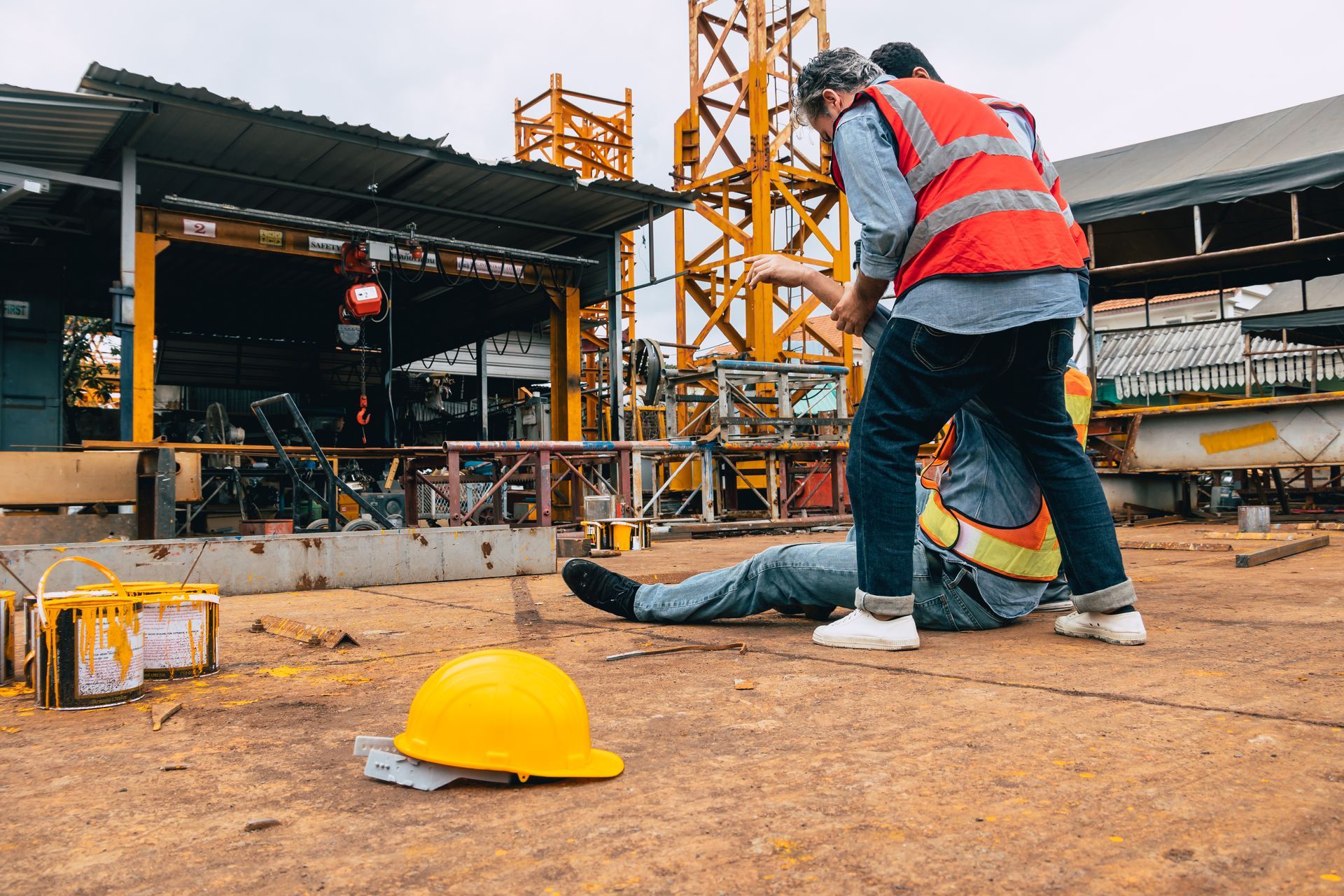
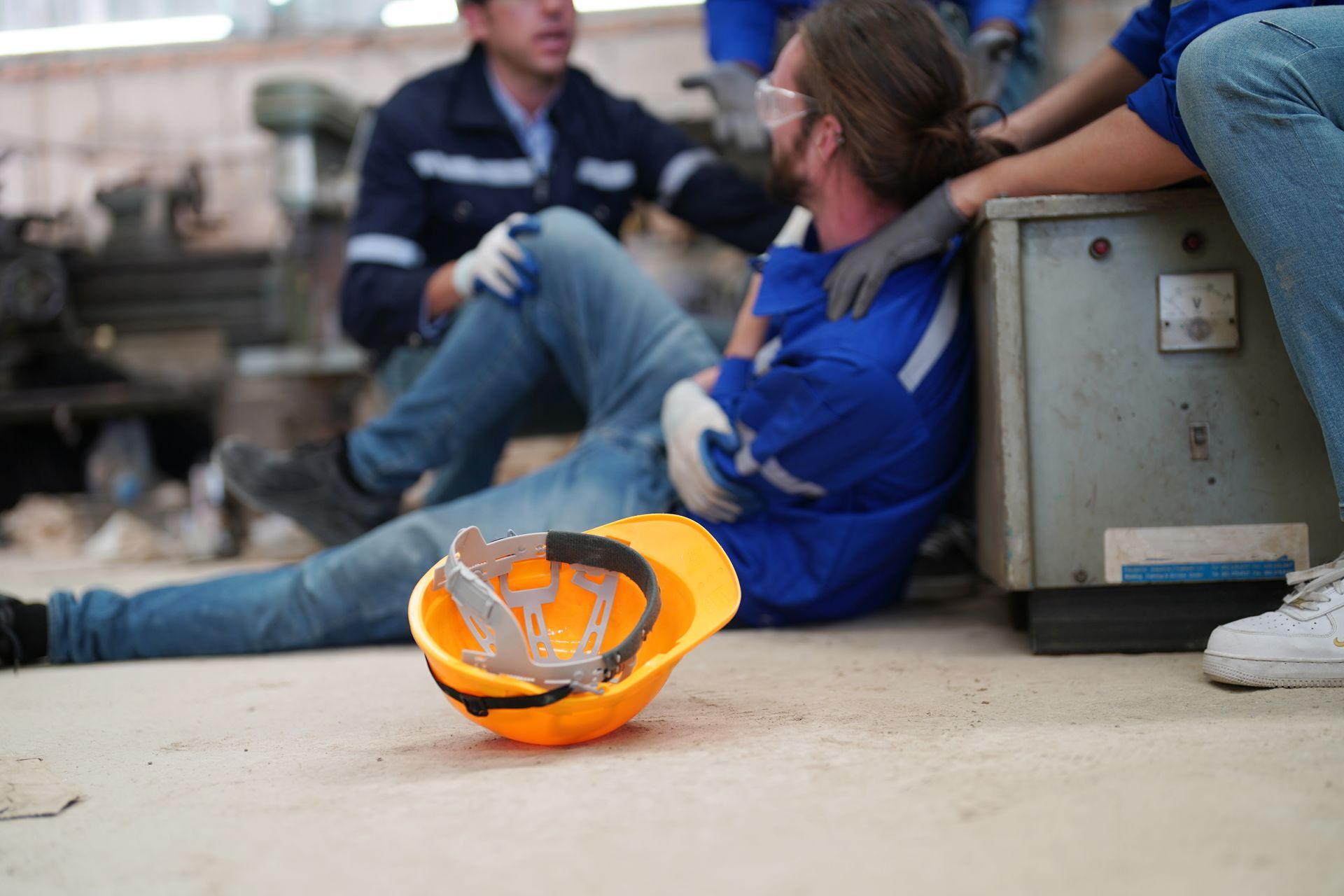
Recoveries in the Injuries We See on Job Sites
$3 million
For a woman struck by a garbage truck.
$2.2 million
For a lumbar injury requiring spinal fusion.
$2 million
Jury verdict where an SUV was struck by a truck.
$700,000
For a man who suffered a pulmonary injury from cement dust exposure.
$600,000
For a woman injured in a fall down defective stairs.
Spinal fusions, crush injuries, falls and dust exposure are the construction file in a different setting, and they are what we have tried. Our full case results are published with the injuries attached.
The case evaluation is free, and we take construction cases on a contingency fee, which means no fee unless we recover compensation for you.
Where We Take Construction Cases Across Chicagoland
We take construction site injury cases in Chicago and across Cook, DuPage, Lake, Will, Kane, McHenry and Kankakee counties, including Cicero, Waukegan and Naperville. The work a tradesman here recognizes is the work we see:
- High-rise and hotel construction in the West Loop, River North and the South Loop
- Warehouse and distribution build-outs along I-55 and I-80 through Will County
- Road, bridge and deck work on the Kennedy, the Eisenhower and I-94 through Waukegan
- Data center and corporate construction along the I-88 corridor through Naperville
- Residential rehabs and tuckpointing work in Cicero and Berwyn
Where the case is heard depends on which claim it is:
- The comp claim is heard by the Illinois Workers' Compensation Commission in Chicago
- A Cook County negligence case is filed in the Law Division at the Richard J. Daley Center
- DuPage cases are heard in Wheaton, Lake County in Waukegan, Will County in Joliet and McHenry County in Woodstock
Our office is at 311 N. Aberdeen, Suite 200D, Chicago, IL 60607, about ten blocks west of downtown, with parking and access from the CTA Blue and Green lines. On this page more than any other, the offer that matters is the other direction: a worker with a pelvic fracture or a fresh spinal fusion is not driving to Aberdeen Street, so we come to your home or your hospital room. Call (312) 492-7700
or email
info@lsblaw.net.
Thirty Years of Chicago Courtrooms Behind Your Claim
When you are choosing a Chicago construction injury attorney, the trial record is the thing you are actually hiring. Leonard S. Becker opened this practice in 1993 and has spent more than three decades trying injury cases in Chicago.
- Admitted in the Illinois state courts, the Federal District Court for the Northern District of Illinois and the Seventh Circuit Court of Appeals
- Member of the Illinois Bar Association, the Illinois Trial Lawyers Association and the Federal Trial Bar for the Northern District of Illinois
- Work covered by the Chicago Tribune, the Chicago Sun-Times and the Chicago Daily Law Bulletin
- Contingency fee, with no fee unless compensation is recovered
Construction Accident Questions People Often Ask
Can I sue the general contractor if I already filed a workers' compensation claim in Illinois?
Yes. Workers' compensation is the only claim you have against your own employer, under 820 ILCS 305/5(a), but that bar covers nobody else on the site. The general contractor, another subcontractor, the property owner and the equipment supplier can all be sued for negligence while your comp claim is open. The two claims run at the same time and have to be coordinated.
How long do I have to file a construction accident claim in Illinois?
It depends which claim. Notice to your employer is due within 45 days, the comp claim goes to the Illinois Workers' Compensation Commission within three years, and the negligence claim against a contractor or owner runs two years under 735 ILCS 5/13-202. If the site belonged to a city, school district, park district or transit agency, that drops to one year under 745 ILCS 10/8-101.
What does workers' compensation pay after a construction injury, and what does it not pay?
It pays your reasonable medical treatment, part of your lost wages while you are off, and a permanent disability award if you do not fully recover, and the employer's carrier pays the medical bills directly rather than sending them to you. It pays nothing for pain, nothing for scarring or disfigurement, and nothing for the loss of what you could do before. Those damages are only available in the third-party claim.
Who besides my employer can be responsible for a job site injury?
Anyone on the site who was not your employer and who had a hand in the hazard. That commonly means the general contractor, another trade's subcontractor, the owner or developer, the company that rented or serviced the equipment, and sometimes the architect or engineer. Which of them is liable turns on who retained control over the work that hurt you.
What happens to the workers' compensation lien if I settle with the contractor?
Under Section 5(b) of the Act your employer or its carrier is reimbursed out of the settlement for the benefits it paid, and where your attorney substantially contributed to the recovery the employer pays 25% of that reimbursement toward the fee. The number is negotiable in practice and it has to be resolved before the money is distributed. Settling one claim without running the lien math on the other is how workers lose most of a recovery.
Do you charge anything up front for a construction accident case?
No. The case evaluation is free and we work on a contingency fee, one-third on the negligence claim and 20 percent on the workers' compensation claim, so there is no fee unless we recover compensation for you. If there is no recovery there is no fee and no case expenses to repay.
The Job Site Records Are Disappearing While You Decide
If you were hurt on a Chicago construction site, the deadlines are already running and the logs, the safety plan and the OSHA file are already aging out. Tell us what happened and we will tell you honestly whether you have one claim or two, and what has to be demanded this week. Every case we take is prepared as though it will be tried, which is why defendants pay us. Call (312) 492-7700 or email info@lsblaw.net.