

Waukegan Truck Accident Lawyer for Lake County Crashes
We represent people hurt by tractor-trailers and commercial trucks across Lake County, and we build the case on the federal driving logs and maintenance records the carrier controls, because the trucking company's investigator reaches the scene the same afternoon and nobody is there taking your side of it.
The carrier's people photographed the truck and took the driver's statement while you were still in the emergency department. Call (312) 492-7700
or email
info@lsblaw.net
and your side of the case starts today.
The Waukegan Roads Where Trucks and Commuters Meet
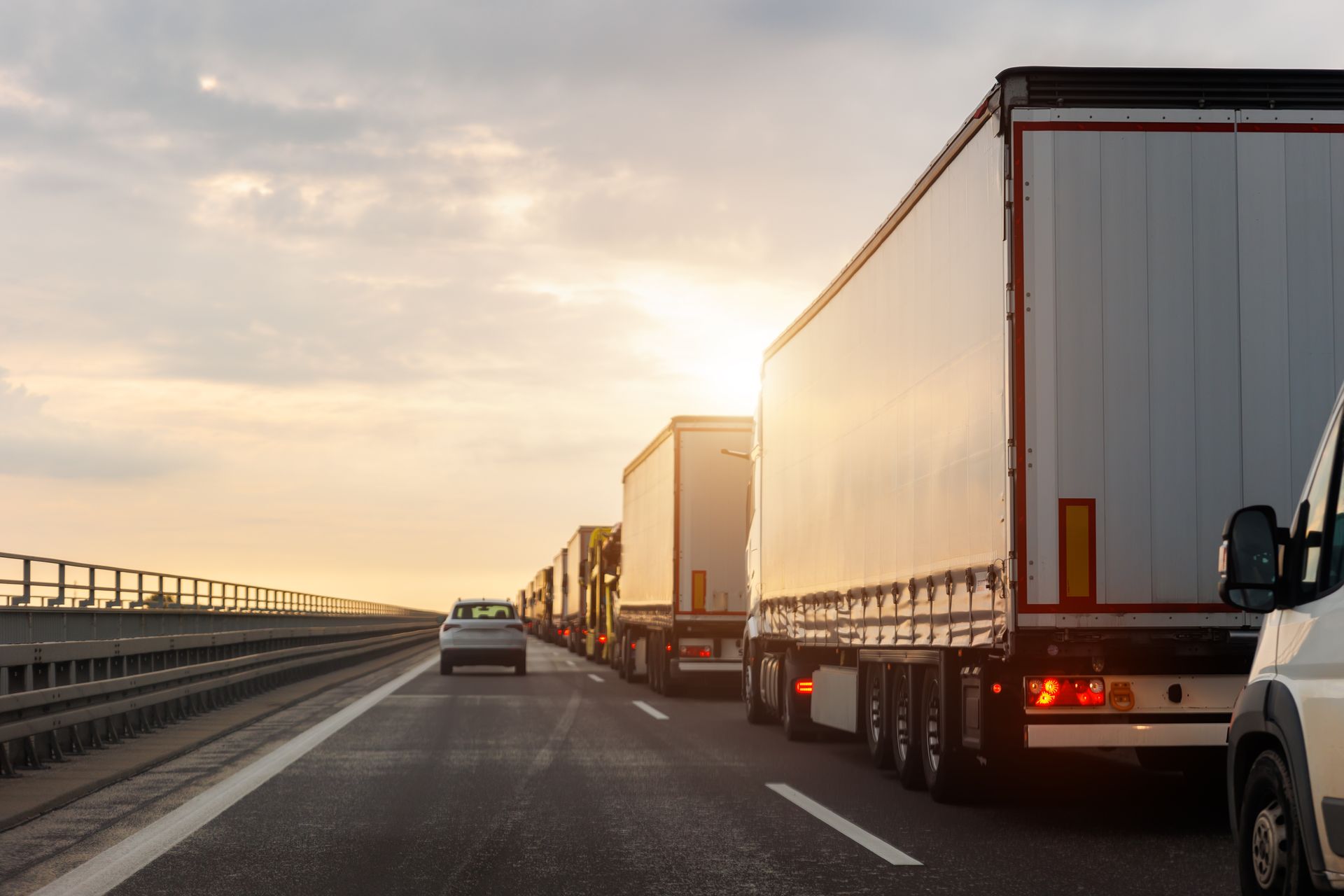
Lake County moves freight. A Waukegan commute puts you alongside tractor-trailers, tankers, dump trucks, delivery box trucks and last-mile vans on the same roads every morning.
- I-94 and the Tri-State Tollway, carrying north-south freight past Waukegan at highway speed.
- US-41 and the Skokie Highway corridor, where local merging traffic meets long-haul trucks.
- Illinois Route 120, Belvidere Road, and Illinois Route 137, the east-west truck routes feeding the lakefront.
- Green Bay Road and the Amstutz Expressway, moving delivery and box truck traffic through town.
- Grand Avenue at the I-94 interchange in Gurnee, where retail volume and truck volume run through the same ramps.
- The industrial and warehouse traffic around Waukegan National Airport and the Port of Waukegan, where tankers and dump trucks share surface streets with cars.
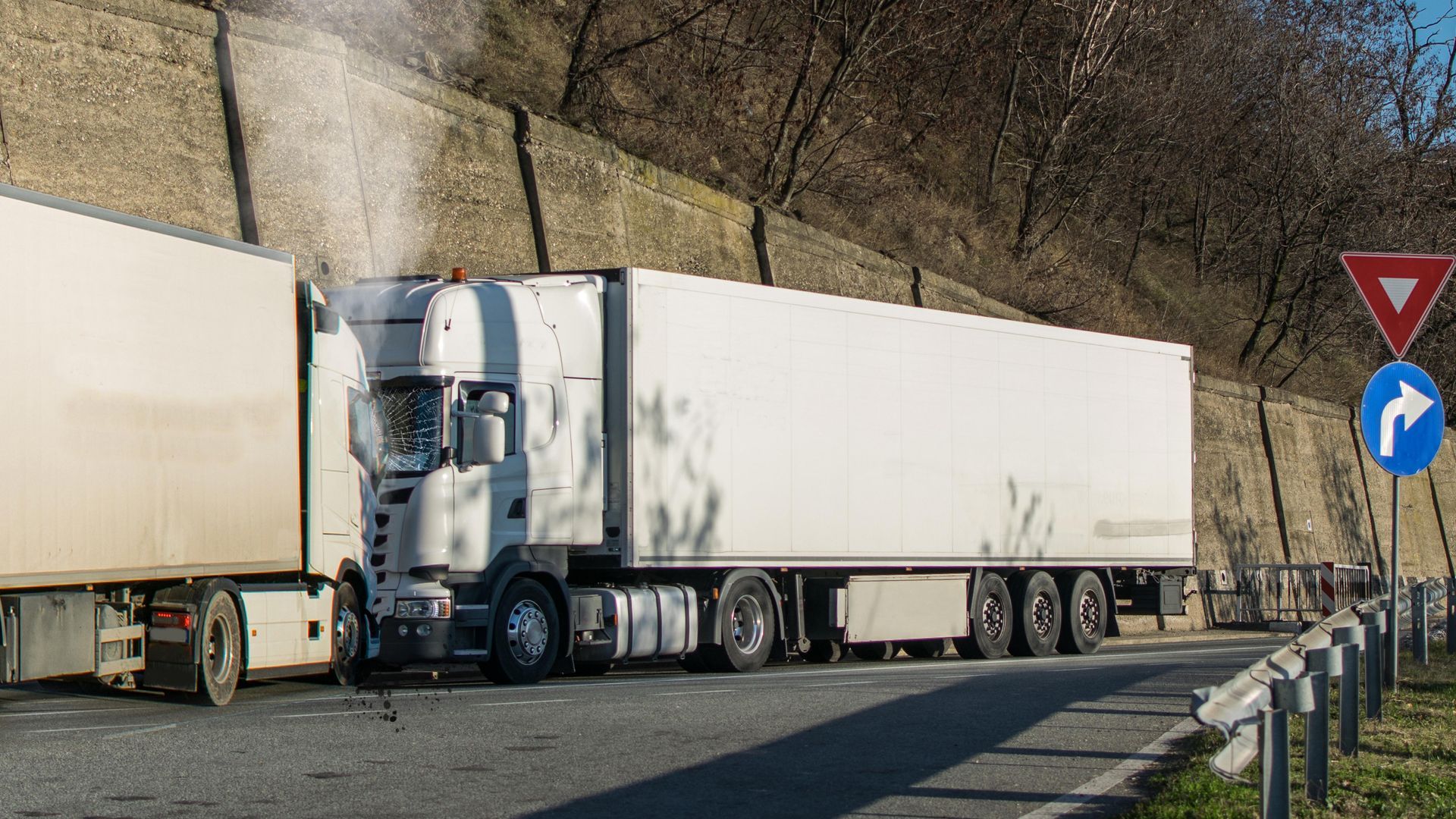
When one of those vehicles hits you, what follows is not a two-car fender bender with a bigger number on it. A semi weighs up to forty tons loaded, the injuries are different, and the claim runs on a set of rules that never touch an ordinary crash.

Why a Semi Claim Is Not a Car Claim
A private driver answers to the Illinois Vehicle Code. A motor carrier answers to the Federal Motor Carrier Safety Regulations, and those rules generate a paper trail we can demand.
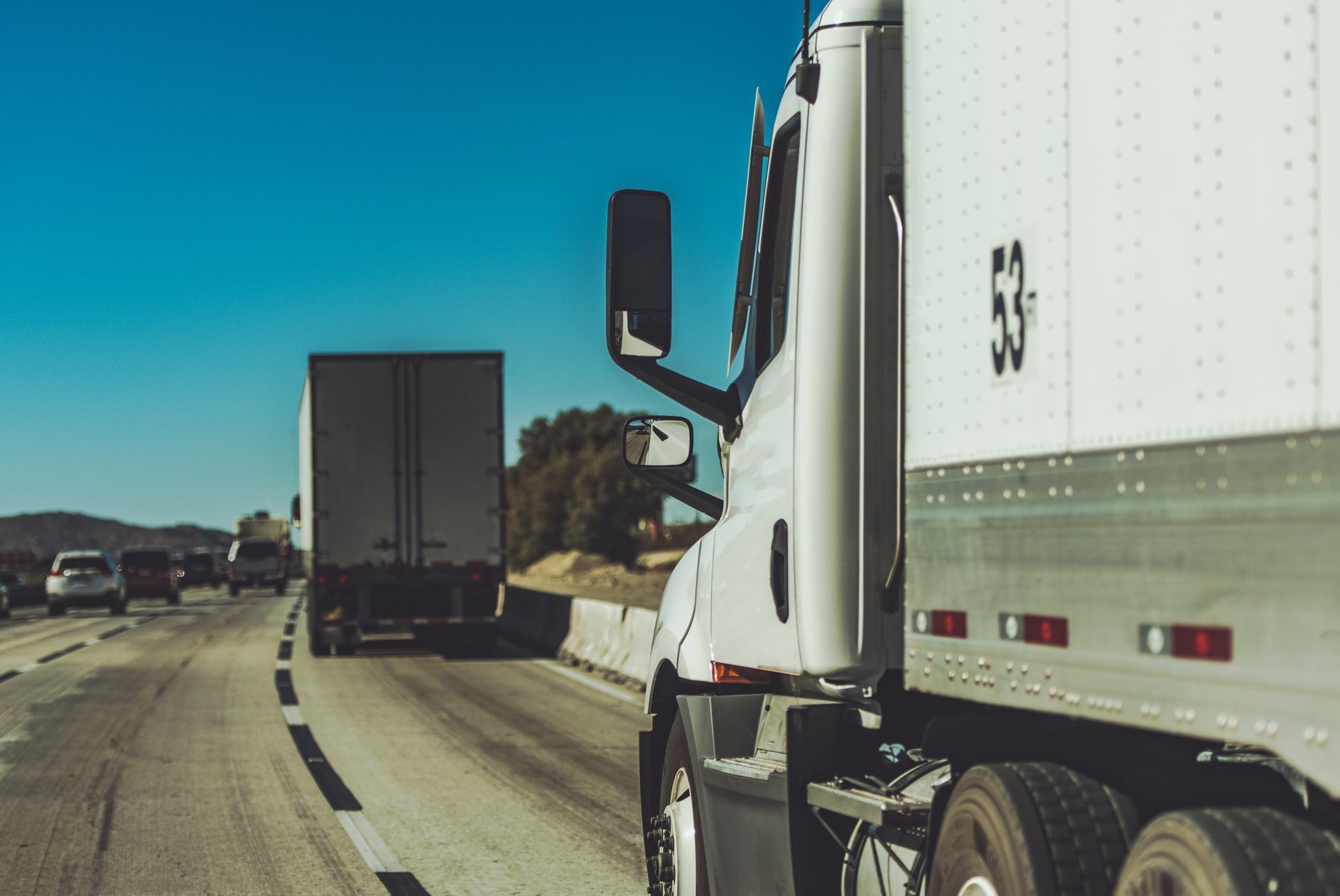
- Hours-of-service limits under 49 CFR Part 395 cap a driver at 11 hours of driving inside a 14-hour window, with 60- and 70-hour weekly ceilings, which is how we learn whether the driver was over hours when the truck reached you.
- Electronic logging device data records those hours minute by minute, so the shift that ended in your crash exists as a file rather than as the driver's memory of it.
- Driver qualification files under Part 391 hold the licensing, testing and employment history the carrier was required to review before putting that driver in the cab, which is where a thin hiring file shows up.
- Inspection, repair and maintenance records under Part 396 document every brake, tire, light and annual inspection, which is how we establish whether service was overdue.
- Cargo securement rules under Part 393 govern how a load is blocked, braced and tied down, which matters when the trailer came around because the freight moved first.
- Minimum financial responsibility under Part 387 is the reason a commercial truck carries coverage limits no private driver does, and it tells us how much insurance is actually available to your claim.
Those records exist right now, and they do not stay that way. A preservation letter puts the carrier on written notice to hold the driver's logs, the electronic logging download, the telematics and dash camera footage, the dispatch records and the maintenance file before ordinary retention cycles overwrite them. Electronic logging data can age out in a matter of months. That is the reason a semi truck crash on I-94 is worth a phone call in the first week rather than the first year.
One Crash, Several Insurers, None of Them Yours
A single truck collision can produce several separate claims against several separate companies, each with its own insurer and its own defense counsel. Sorting out who is answerable is part of the work.
- The driver, for the decisions made behind the wheel.
- The motor carrier that hired, trained and dispatched that driver, and that set the schedule the driver was running.
- The maintenance shop or fleet contractor responsible for the brakes, tires and inspections that were supposed to happen.
- The shipper or warehouse crew that loaded and secured the cargo.
- The freight broker that placed the load with a carrier whose safety record was available to check.
- A parts or component manufacturer, when a tire, coupling or brake assembly failed.
Our general treatment of commercial vehicle claims sits on our Chicago
truck accident page. This one is the Waukegan and federal-records version of it.
Which Court Hears a Waukegan Truck Accident Case?
A Waukegan truck crash claim is filed in the Circuit Court of Lake County, the Nineteenth Judicial Circuit, at the courthouse in downtown Waukegan. That is where the case is heard, and that is where we appear.
- Illinois gives you two years from the date of the crash to file a personal injury suit under 735 ILCS 5/13-202.
- A wrongful death claim runs two years from the date of death.
- A claim involving a municipal or county-owned truck generally runs on one year under 745 ILCS 10/8-101, which is far shorter than most people assume.
Two years sounds like room. It is not, once you account for treatment that has to finish, records that have to be assembled and electronic data that has a shorter shelf life than the deadline does.
What the Adjuster's First Fault Question Is Really For
Illinois uses modified comparative negligence. Under 735 ILCS 5/2-1116 you can recover as long as you were not more than 50% at fault, and your recovery is reduced by whatever share of blame gets assigned to you.
Every early call asking you to describe the crash in your own words is aimed at that percentage. The question sounds routine. The answer is worth money.
Say nothing about fault until you have talked to us. Call (312) 492-7700
or email
info@lsblaw.net, and it costs you nothing to find out where you stand.
Who Pays Your Medical Bills While the Case Is Open
Your own health insurance, and any medical payments coverage on your auto policy, generally pay as treatment happens. The trucking company's insurer pays at resolution, not along the way, and it is under no obligation to cover a bill while it is still arguing about fault.
Those early payments create liens and subrogation claims against your eventual recovery. We track them from the beginning and negotiate them at the end, because a settlement that looks adequate before liens are resolved often is not.
When a Truck Crash Takes Someone in Your Family
A fatal collision becomes a
wrongful death claim brought on behalf of the surviving spouse and next of kin, and it runs on its own statute and its own two-year clock. The federal records that show why the truck was where it was matter more in these cases, not less.
Our Record in Commercial Vehicle Cases
- $3 million recovered for a woman struck by a garbage truck.
- $2 million verdict in a collision between an SUV and a truck.
- $2.2 million recovered for a client who required a lumbar fusion.
Leonard S. Becker has practiced in Chicago-area courtrooms since 1993 and is admitted in the Illinois state courts, the Federal District Court for the Northern District of Illinois and the Seventh Circuit Court of Appeals. Federal motor carrier regulations and federal courtrooms belong in the same paragraph, and that admission is why. Every case is prepared as though it will be tried.
We take Lake County truck cases on a contingency fee. There is no fee unless we recover compensation for you, and the fee comes out of the recovery rather than out of your pocket. Our page on
how our contingency fee works sets out the arrangement in full.
We Appear in Lake County, and We Come to You
Our office is at 311 N. Aberdeen, Suite 200D in Chicago, about ten blocks west of the Loop, with parking and access from the CTA Blue and Green lines. You do not have to come to it. When an injury keeps you from traveling, we meet you at your home or in your hospital room in Waukegan, Gurnee, North Chicago, Zion or anywhere else in Lake County.
If your crash involved a passenger vehicle rather than a commercial truck, our Waukegan
car accident page covers that claim instead. For everything we handle in Lake County, start at our
Waukegan injury lawyer page.
Questions Lake County Truck Crash Clients Ask First
How long do I have to file a truck accident lawsuit in Lake County, Illinois?
Two years from the date of the crash, under 735 ILCS 5/13-202. A wrongful death claim runs two years from the date of death, and a claim against a municipal or county-owned truck generally runs one year under 745 ILCS 10/8-101. Because the electronic driving logs and telematics data can be gone long before the deadline arrives, the practical window to build the case is much shorter than the window to file it.
Where is a Waukegan truck accident case filed?
In the Circuit Court of Lake County, the Nineteenth Judicial Circuit, at the courthouse in downtown Waukegan. Cases involving out-of-state motor carriers are sometimes removed to the Federal District Court for the Northern District of Illinois. Leonard S. Becker is admitted in both, so the venue does not change who handles your case.
Who besides the driver can be liable after a semi truck crash?
The motor carrier that hired and dispatched the driver, the maintenance shop responsible for the brakes and inspections, the crew that loaded and secured the cargo, the broker that placed the load, and a component manufacturer when a part failed. Each one carries separate insurance. One crash on Route 120 can therefore produce several claims, and identifying all of them early is what keeps available coverage from being left on the table.
What records does the trucking company have to keep after a crash, and how fast do they disappear?
Federal rules require carriers to keep driver logs, electronic logging device data, driver qualification files, and inspection and maintenance records, but the required retention periods are measured in months for some of the most useful ones. Telematics and dash camera footage often sit on systems that overwrite on a routine cycle. A written preservation letter sent early is what stops the file from thinning out before anyone looks at it.
What does it cost to hire a truck accident lawyer in Waukegan, IL?
Nothing up front. We work on a contingency fee, which means our fee is a percentage of what we recover and there is no fee at all if we recover nothing. The initial case evaluation is free, and you can have it over the phone.
Start Before the Logs Age Out
The trucking company has already begun its investigation. Everything we need to answer it, the driver's hours, the maintenance history, the load, the data recorder, is in someone else's hands until we ask for it in writing.
Call (312) 492-7700, email
info@lsblaw.net, or send us the details and we will tell you what your case involves and what the deadlines are.